Saturday, July 16, 2011

Quick Takes: "Horrible Bosses" and "Bad Teacher"


Jason Bateman has the remarkable gift of being immensely likable in everything he does, capable of buoying mediocre material with his irresistible charm. I just love the guy, and that is precisely why I tolerated Horrible Bosses. Seth Gordon's raunchy comedy about three frustrated employees (Bateman, Jason Sudeikis, Charlie Day) who hatch a plan to kill their three demonic bosses has an inspired premise, but it fails to capitalize on its potential. There are some funny moments, and the movie is pretty entertaining throughout, but it suffers from a disheartening wealth of missed opportunities. Horrible Bosses is not as funny as it should be, nor is it as daring as it should be, considering the dark and ambitious premise. But the film stays afloat thanks to Mr. Bateman, a supremely talented and affable performer who always excels, regardless of the quality of material that he is given. Horrible Bosses does feature some terrific supporting performances, most notably from Jason Sudeikis of Saturday Night Live fame, Jamie Foxx as a strange ex-con, and from the three evil bosses (Jennifer Aniston, Kevin Spacey, Colin Farrell). Aniston's portrayal of a sex-obsessed dentist is particularly amusing. But it is Bateman who saves the day, maintaining consistent entertainment value in a film that could have been a bigger success.


And then there is Bad Teacher, a mean-spirited and surprisingly dull disappointment that tries to create an endearing figure out of a wholly unlikable character. At least I think that's what Bad Teacher is trying to do. It's all part of the aggravating ambiguity of this misguided comedy. The cast, for the most part, is not the prolem. The lovely Cameron Diaz gives it her all, but she can't make a likable character out of an alcoholic gold digger of a teacher who drills kids with dodgeballs and tells insecure boys that they have no shot of winning over the pretty girl. The always hilarious Jason Segel delivers some of the movie's only big laughs as a single gym teacher with a crush on Cameron Diaz. John Michael Higgins, Phyllis Smith, Lucy Punch, and Eric Stonestreet all give admirable efforts with characters that are thinly conceived. The usually reliable Justin Timberlake, however, is grating as a shockingly clueless teacher who has no intellect whatsoever. And did I mention that there is a lengthy dry-humping scene? Bad Teacher is a letdown from director Jake Kasdan, who directed the very funny 2002 film, Orange County.





Monday, July 4, 2011

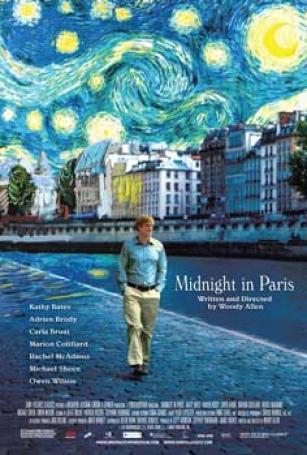
The Romanticism of the Past, and the Insecurities of the Present: "Midnight in Paris"


He is an ageless wonder, that Woody Allen. His words have an unmistakable allure, purely conversational yet remarkably poignant and full of insight and wisdom. His words are at once funny and sad, hopeful and pessimistic. Thus, the words of Woody Allen affirm the inconsistent adventure that is life. No matter your current mood, there is a remedy for your maladies in the films of Woody Allen. A filmmaker as prolific as Mr. Allen is bound to make some regrettable movies over the course of his career, and surely Mr. Allen has. Ultimately, however, the filmography of the 75-year-old virtuoso features a stunning array of towering achievements, movies that span genres and style. While his latest endeavor, Midnight in Paris, is not quite in the same class as Allen's finest work (Hannah and Her Sisters; Crimes and Misdemeanors; Annie Hall; Match Point), it is still a magical and engaging marvel.


The vast majority of Mr. Allen's movies have taken place in New York City, but in recent years he has shown a fondness for Europe. Both settings are perfect for the sexiness and romanticism of Woody Allen's films. As he did in Match Point and Vicky Cristina Barcelona, Allen uses the astonishing beauty of Europe to magnificent effect. The opening montage of Midnight in Paris features gorgeous shots of the City of Lights, and by the end of the film I wanted to get up and move to Paris immediately. But visual wonder is not the only redeeming quality of this terrific movie. Once again, Woody Allen skillfully weaves themes of romance, cynicism, self-doubt, and hope. And in Midnight in Paris, he blends in a little bit of fantasy as well. The plot centers on a significant flight of fancy, a surprise that will not be mentioned in this review. However, I will reveal that it involves the likes of Hemingway and Faulkner, Picasso and Dali. The imagination of Midnight in Paris is at first slightly jarring, but the movie quickly grips you in its pull.


The execution of Woody Allen's brilliant screenplays always rests in the hands of his actors, and as always, the actors deliver in Midnight in Paris. The always excellent Owen Wilson gives the best performance of his career in the lead role as Gil Pender, a disillusioned writer from Beverly Hills whose nostalgia and love for Paris instills in him a desire to move to Paris, much to the chagrin of his pampered fiancee, played beautifully by the beautiful and supremely talented Rachel McAdams. Wilson is the perfect choice to play a Woody Allen leading man. Wilson portrays Gil as a handsome and charming man who is nonetheless unsatisfied and driven by his affinity for the past, where in his mind, things were so much easier, so much more romantic. It is a terrific performance. Here's hoping that Mr. Wilson and Mr. Allen collaborate again soon. The lovely Marion Cotillard is also outstanding. Much like Ms. McAdams, Ms. Cotillard is a tremendous actress who never hits a false note. Other superb supporting work is turned in by the great Kathy Bates, Michael Sheen, French First Lady Carla Bruni, and Corey Stoll as a certain famous author.


Midnight in Paris isn't perfect, but it is a richly satisfying reminder of Woody Allen's brilliance. Much like Clint Eastwood, Woody Allen is not hindered by age. He remains a compelling cinematic force, and his work demands to be seen. While millions of Americans flock to the theaters this summer to see robots exploding and zoo animals talking, I hope they also find time to seek out Midnight in Paris, a delectable summer treat by one of America's greatest filmmakers.

Friday, May 27, 2011

The Hilarity and Emotions of Friendship and Love: "Bridesmaids"


Bridesmaids is just about the most satisfying movie of the year, an uproariously funny and surprisingly moving delight that will send even the most curmudgeonly of individuals into a gleeful state of happiness. Here is a movie that will make you laugh endlessly and soothe your worries. Here is a movie that manages the remarkable feat of balancing raunchy comedy with authentic, powerful emotion. First and foremost, Bridesmaids is a wonderfully funny hard-R comedy that delivers some of the biggest laughs of any movie in recent memory. But the movie is also impressive in its flawless and involving foray into the emotions of friendship and love. For all of its rollicking fun and riotous hilarity, Bridesmaids always feels genuine and warm-hearted. Simply put, the film is a smashing success.


Kristen Wiig, of Saturday Night Live fame, stars as Annie, appointed by her best friend Lillian (Maya Rudolph) to be the maid of honor at Lillian's upcoming wedding. Annie, newly single and insecure after a rough break-up with her ex-boyfriend, is nonetheless excited to help Lillian lead the organization and planning of the wedding. Annie's insecurities are exacerbated, however, when her friendship with Lillian is jeopardized by the selfish behavior of fellow bridesmaid Helen (Rose Byrne), a pompous and wealthy friend of Lillian's who actively seeks to replace Annie as Lillian's best friend. The rivalry between Annie and Helen instills in Annie a sense of loss and anger toward Helen. Furthermore, Helen's antics and Annie's burgeoning frustration tarnish the preparations for Lillian's wedding. The mishaps that ensue make for magnificent scenes of comic perfection.


Bridesmaids features a tremendous cast, and the film's M.V.P. is Kristen Wiig. Wiig, who also co-wrote the brilliant screenplay with Annie Mumulo, is a revelation in the lead role. Wiig, who has always been very funny on SNL, delivers a performance that is simultaneously hilarious and heartfelt, fearless and vulnerable. It is a sensational piece of acting, and it establishes Wiig as a superb, versatile performer on screen. I can't wait to see what she does next. In addition to Ms. Wiig, terrific performances are given by Melissa McCarthy, Rose Byrne, Maya Rudolph, Jon Hamm, Ellie Kemper, Chris O'Dowd, and Jill Clayburgh. McCarthy and Hamm are particularly excellent. Ms. McCarthy is responsible for some of the movie's biggest laughs as a socially awkward and somewhat aggressive bridesmaid with no inhibitions, and Mr. Hamm is very funny in his portrayal of an egotistical sleazebag.


The world of mainstream cinematic comedy has been crowded with too much testosterone in recent years. Movies like The Hangover; I Love You, Man; and Dinner for Schmucks, albeit funny and entertaining, are striking in their lack of leading female characters, and the trend in Hollywood comedies was starting to run the risk of misogyny. Thus, Bridesmaids is a welcome breath of fresh air. The women rule in this movie, and memo to the males: Bridesmaids is better than anything the guys have created. Smart, poignant, and hysterically funny, Bridesmaids is likely to go down as a classic. I love this movie.


Sunday, May 15, 2011

Selling All Possessions With the Hope of a Better Tomorrow: "Everything Must Go"


Will Ferrell has always been a brilliant force in the comedy ranks, a delightfully goofy performer who brings a magnetic appeal to his frequent variations on the man-child persona. In his latest film, however, Mr. Ferrell is a long way from Ron Burgundy. In Everything Must Go, Will Ferrell establishes himself as an astonishing dramatic actor. Ferrell delivered a nuanced performance in the underrated 2005 film Stranger Than Fiction, and his work in Everything Must Go is simply stunning. Much like Robin Williams, Bill Murray, and Jim Carrey, Will Ferrell has flawlessly transitioned from comedy to drama, and the results are extraordinary.


Mr. Ferrell deserves an Oscar nomination for his graceful portrayal of Nick Halsey, a decent man with a good heart who is nonetheless plagued with a destructive alcoholism that wreaks havoc on his life. The film opens with Nick being informed by his sleazy boss that the company has decided to let Nick go. Nick is devastated, and when he arrives home later that evening, he discovers all of his possessions scattered across his front lawn. All of his personal items are accompanied by a note from his wife, informing him that she has left him. His wife has changed the locks, and Nick has no access to his home. The tragic turn of events forces Nick into a malaise of depression and alcoholism, and he spends his nights sleeping uncomfortably on his front lawn. One day, however, Nick takes the advice of a friend and starts a yard sale. It is painful for Nick to part ways with his possessions, but he proceeds with the yard sale in an effort to break with the past and start anew. Nick employs the help of a charming youngster in the neighborhood who helps him organize the yard sale, and the two form a friendship that is essential in helping Nick persevere through immense emotional hardship. Nick also gets to know his new neighbor across the street, and his conversations with her prove to be deeply cathartic. The amazing Rebecca Hall is wonderful as the woman who helps Nick reassemble his life, and young Christopher Jordan Wallace is exemplary as Nick's partner-in-crime.


My description of the plot does not do the movie justice. Many movies have delved into the themes of loss and emotional tumult, but very few movies have treated these themes as intelligently or as poignantly as Everything Must Go. The film, based on a Raymond Carver short story and beautifully written and directed by Dan Rush, is always grounded in authentic emotion. The film is profound and powerful.


And at the center of this excellent movie is Will Ferrell. Ferrell nails the role of Nick Halsey with such moving perfection that it is hard to believe he hasn't appeared in more dramatic roles. It is a truly magnificent piece of acting, and it comes in the best movie I have seen so far this year.

Friday, May 13, 2011

The Battle Between Conventional CGI and Inspired Charm: "Thor"


Thor, the latest blockbuster superhero endeavor to reach the big screen, has a witty charm and lighthearted nature that conjures memories of the terrific Iron Man franchise. What prevents Thor from achieving the same quality as the Iron Man films, however, is a frustrating amount of formulaic limitations. More specifically, Thor suffers from sensory overload, special effects that are indeed eye-catching but ultimately unsatisfying. The movie is at its best when it relies on the dazzling chemistry between Chris Hemsworth and Natalie Portman. In these moments, Thor is simultaneously enchanting and funny, entertaining and transcendent. But when the film veers into the realm of galactic CGI, it loses its charm.


Let's start with the positives: The aforementioned Mr. Hemsworth and Ms. Portman are wonderful together. Mr. Hemsworth is a hunky charmer, an ideal choice for the title character. Ms. Portman, one of the world's most magnificent actors, is sexy and confident. The screen crackles with an irresistible energy every time Portman and Hemsworth share the spotlight. The remaining members of the cast, including the great Anthony Hopkins, take themselves far too seriously. Portman and Hemsworth are the only two actors who come across as easygoing and relaxed, and the movie capitalizes on their vibrant rapport with scenes of exhilarating romance and humor. Thor would be something close to great if director Kenneth Branagh and the team of three screenwriters focused more intently on the charisma of Ms. Portman and Mr. Hemsworth.


Unfortunately, Thor succumbs to the temptation of CGI, CGI, and more CGI. The special effects are undeniably remarkable, and the viewer is viscerally awed upon first exposure to the planet Asgard, a place filled with visual wonder. But eventually, Asgard loses its pull. I became increasingly annoyed with the bloated amount of time devoted to generic battle sequences and interminable scenes featuring creepy-looking ice people. Thor rejuvenates the viewer when it returns to the beautiful setting of New Mexico, but Asgard takes up far too much of the film's 114 minutes.


Is Thor worth seeing? I say, hesitantly, yes. The scenes set in New Mexico between Mr. Hemsworth and Ms. Portman are superbly acted and wildly entertaining. The entertainment value of this portion of the movie is significant enough to make amends for the been-there-done-that feel of Asgard. Still, there is something irritating about the continuation of the CGI phenomenon at the expense of genuine human drama.


Wednesday, April 20, 2011

Living Vicariously Through the Canine: "Best in Show"


This is part of a recurring series in which I review some of my all-time favorite movies.


Let me commence this review with a personal admission: I am not a dog lover. I like the idea of dogs in theory, but when I am in their presence, I dissolve into a nervous wreck. There is just something about their relentlessly upbeat energy that I mistake for threatening aggression. My irrational fear of dogs is one of my many eccentricities, and that is why I relate so closely to the wacky cast of characters in Christopher Guest's Best in Show. Unlike me, the group of neurotic charmers in Best in Show have an unabashed love for all things canine-related. They live, breathe, and bleed dog. To say that these people treat their dogs like their children is an understatement. But you see, I understand their neurosis. We are all in one way or another eccentric, and that is why the movies of Christopher Guest are always so hysterically funny and endearing, all at the same time. Sure, Christopher Guest has a blast poking fun at the dog show extravaganzas and all of the people who partake in the spectacle of dog shows, but his comic aim is never mean-spirited. We laugh at the weirdness of the characters in Best in Show, but only because that weirdness is so jarringly human and sweet. The filmmakers behind the cruelly unfunny Scary Movie franchise should take note: It is possible to make a hilarious spoof without tearing people down in the process.


Guest is the King of Mockumentary, and he is responsible for some of the greatest comedies ever made. Every one of his films (A Mighty Wind and Waiting for Guffman to name a couple) are brilliant delights. Best in Show, though, is his best. The laughs come faster than a Usain Bolt sprint. The aforementioned cast of characters are portrayed by an all-star cavalcade of Chris Guest regulars. Catherine O'Hara is a promiscuous owner of a Norwich terrier named Winky. O'Hara's husband is played by Eugene Levy (who co-wrote the flawless screenplay with Guest). Levy's performance as a socially awkward, loyal husband who literally has two left feet is simply priceless. O'Hara and Levy have a tremendous rapport that produces enormous laughs. The same can be said of Parker Posey and Michael Hitchcock, who gleefully portray a pompous rich couple worried that their dog has been emotionally scarred after the dog witnessed them having sex. Michael McKean and John Michael Higgins are also magnificent as the gay couple who are proud owners of their Shih Tzu. Jennifer Coolidge, Bob Balaban, Jane Lynch, and Jim Piddock all bring the funny in supporting roles. The biggest laughs of the movie, however, come courtesy of the great Fred Willard. Willard, who improvised all of his dialogue, is a comedic genius who should have received an Oscar nomination for his uproarious performance as a clueless Best in Show television commentator who knows absolutely nothing about dogs.


My review does not do the movie justice. Best in Show is so funny that it has the capability to eradicate international conflict and initiate world peace. You should go see it right now. In fact, what are you doing reading this review? Best in Show is the type of comedy that demands to be seen. It is also the type of comedy with a winning heart. There is not a mean-spirited second in the 90-minutes that constitute Best in Show. At its core, this movie, like all of Mr. Guest's mockumentaries, is a celebration of eccentricity. Thus, watching Best in Show is a cathartic experience, a soothing exercise that makes us learn to appreciate our own oddities. And did I mention that it's funny?


Sunday, April 17, 2011

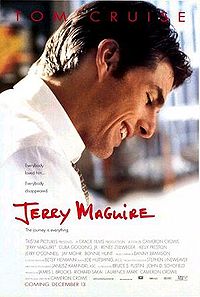
Proof that Great Romantic Comedies Do Exist: "Jerry Maguire"


This is part of a recurring series in which I review some of my all-time favorite movies.


In many ways, Cameron Crowe's Jerry Maguire served as my introduction to the movies, and not just because my five-year-old self had an eerie resemblance to six-year-old Jonathan Lipnicki. This is the film that cultivated my love for cinema. In an era in which so many romantic comedies come dead on arrival, Jerry Maguire is a cinematic miracle that to this day continues to instill in the viewer a warm sense of nostalgia. Jerry Maguire is a deeply moving and wonderfully entertaining love story that is simply impossible to resist. Even the most misanthropic and cynical of people will swoon over this movie, the most impressive entry in Cameron Crowe's accomplished filmography.


Tom Cruise stars as Jerry Maguire, a highly successful sports agent who becomes disillusioned with the materialistic nature of his profession. When he writes an essay expressing his dissonance about the sports management industry, he draws the ire of his bosses, and is suddenly fired. The firing deals Jerry a major psychological blow, and he sinks into a dispassionate malaise. One of his co-workers, however, admires Jerry's courage and ambition and decides to quit the company to help Jerry embark on a new professional endeavor. She is Dorothy (Renee Zelwegger), a single mother of one, and the two quickly fall in love. Along with the help of Dorothy, her adorable young son (the aforementioned Jonathan Lipnicki), and his ebullient star client (Cuba Gooding, Jr.), Jerry attempts to alleviate the stress that has permeated his life in the aftermath of his dismissal at Sports Management International.


The previous paragraph is an extremely brief overview of the plot that may make the movie sound overly maudlin, predictable, and sentimental. Jerry Maguire is anything but. Cameron Crowe's terrific screenplay and his beautifully focused direction ensures that "Jerry Maguire" is always grounded in true, honest emotion. Jerry Maguire explores the familiar themes of love and perseverance in profoundly affecting ways, and the result is something close to perfection. Crowe is also buoyed by the excellence of his actors. Tom Cruise has been a media pariah in recent years, but his performance in Jerry Maguire reminds us that he really is an extraordinary actor. In Jerry Maguire, Cruise is the epitome of a movie star, delivering a performance of suave charm and deep emotion. It is the best work of his career, and that is saying something. The wonderful Renee Zelwegger matches Cruise every step of the way. Zelwegger exudes the type of irresistible enchantment that shows why she is such a talented and versatile actor. And Cuba Gooding, Jr. is magnificent in an unforgettable performance that won him an Oscar.


Jerry Maguire is often most easily associated with the catchphrase, "Show Me the Money!". But that line of dialogue is just one of the many great moments in this truly outstanding movie. In 1996, I fell in love with the movies. I have Cameron Crowe to thank.


Saturday, April 9, 2011

Moral Conviction in the Pursuit of Justice: "12 Angry Men"


Sidney Lumet, a legend of cinema and one of the greatest filmmakers to have ever lived, passed away today at the age of 86. In honor of Mr. Lumet, here is my review of his 1957 classic, "12 Angry Men":


The twelve jurors commence their deliberations on a sweltering summer day in New York City. It is their duty to decide the fate of the teenage defendant, who is charged with the murder of his father. If the twelve men find the defendant guilty, then he will be sentenced to death. When the twelve men convene in an overheated room to discuss the matter at hand, eleven of the men seem thoroughly convinced of the defendant's guilt. They crack jokes about the supposed obviousness of the case. Only a fool would think that the defendant is innocent. One of the men suggests that they take a quick vote and get over with it. After all, he ain't got all day, and he has tickets to the Yankee game later that night. One juror, however, votes not guilty. The rest of the jurors are flabbergasted. How can this man possibly believe that the boy is innocent? The dissenting juror calmly states his case, explaining that the case at least warrants a thoughtful discussion. The dissenting juror wants to ensure that all aspects of the case are reflected upon before the jury decides to send the teenage boy to his death. The dissenting juror proceeds to explain why he believes that the boy might be innocent. As time progresses, the atmosphere becomes increasingly hot, both literally and metaphorically. Tensions escalate, and one-by-one, the remaining eleven jurors become convinced of the boy's innocence.


The entirety of Sidney Lumet's 12 Angry Men takes place inside the jury room, and that is what makes the film so extraordinarily compelling. 12 Angry Men is as great a film as has ever been made, a stunning achievement that continues to endure 54 years after its initial release. The beauty of this magnificent movie is that the viewer feels an intense sense of proximity to the jurors. Lumet's fimmaking is so effective and involving that the viewer can tangibly feel the stifling heat of the deliberation room. The viewer can tangibly feel the tempers and insecurities of the jurors. Very few films leave such a profound emotional impact.


12 Angry Men is the epitome of an ensemble work. The cast is uniformly astonishing. Henry Fonda is a revelation as the dissenting juror who slowly but surely convinces the remaining jurors of the boy's innocence. Lee J. Cobb is brilliant as a bitter juror who is wrestling with some inner demons due to his fractured relationship with his son. Jack Warden is mesmerizing as an impatient juror with a desperate yearning to end his jury duty so he can attend the Yankees game. Ed Begley is superb as a bigoted juror whose prejudice prevents him from making an impartial assessment of the defendant. Martin Balsam, John Fiedler, E.G. Marshall, Jack Klugman, Edward Binns, Joseph Sweeney, Robert Webber, and George Voskovec are also excellent as the remaining jurors. The Reginald Rose screenplay is a work of thrilling perfection, a searing look inside the minds of the jurors and the heavy burden that has been placed upon them. The film is flawlessly edited by Carl Lerner, as it moves at a breathtaking pace. There is never a dull moment.


The driving force behind the film, however, is the late great Sidney Lumet. 12 Angry Men is the work of a master in full command of his craft. Every frame of 12 Angry Men is an exercise of precise genius. Every shot is deftly executed. One of the most ingenious aspects of 12 Angry Men is the way Lumet handles the scenes related to the inclement weather. In lesser hands, using turbulent weather as a metaphor for burgeoning discord could seem forced. But in the masterful hands of Mr. Lumet, the metaphor is an enormously powerful one. Sidney Lumet made some of the greatest films of all-time (Dog Day Afternoon, Serpico, Network, The Verdict), and in 2007, at the age of 82, Lumet made the brilliant Before the Devil Knows You're Dead, a testament to his ageless talent. As great as those films are, however, 12 Angry Men is Mr. Lumet's best. 12 Angry Men is an endlessly captivating reminder of Sidney Lumet's remarkable career.


Wednesday, April 6, 2011

A Celebration of Music, Love, and Friendship: "That Thing You Do!"


This is part of a recurring series in which I review some of my all-time favorite movies.


That Thing You Do! is the type of movie that makes you want to hug a stranger. Here is a film of radiant joy and warmth, an absolutely irresistible delight that lifts the spirit and soothes the soul. That Thing You Do! was written and directed by the great Tom Hanks, who also stars in the film, and it is a testament to Hanks' tremendous charisma and talent. Set in 1964 and released in 1996, That Thing You Do! still feels as fresh as a summertime breeze. I love this movie.


In many ways, the film is a love letter to The Beatles, and to music in general. The plot centers on a wildly popular 1960's rock-and-roll band named The Wonders, a group of young and attractive music aficionados who start a band and experience rags-to-riches success. The four men who comprise The Wonders (Steve Zahn, Ethan Embry, Johnathon Schaech, Tom Everett Scott) are greeted with euphoria by an adoring public, and they quickly become international sex symbols. That Thing You Do! chronicles the The Wonders' rapid ascendance from obscurity to fame, a rise that features a fair share of tumult along the way. But at its core, That Thing You Do! is about the intersection of music, love, and friendship. And That Thing You Do! is remarkably adept and moving in the way it handles the aforementioned themes.


The movie is perfectly cast. Steve Zahn, Tom Everett Scott, Ethan Embree, and Johnathon Scaech all bring youthful ebullience and innocence to the starring roles. They are wonderful. Tom Hanks is fantastic, as always, as the band's manager. Liv Tyler and Charlize Theron are superb as the love interests. In bad movies, the role of love interest can be a thankless one, but That Thing You Do! gives Tyler and Theron characters that feel real. Tom Hanks' screenplay is a funny and charming gem, and his direction is vibrant and enchanting.


The real star of That Thing You Do!, however, is the music. The soundtrack is simply magnificent, each song a toe-tapping pleasure. It is impossible to finish watching the movie without humming the catchy title track, "That Thing You Do". The soundtrack serves as a joyous ode to the magic of music, and the ability of music to ease your worries and bring happiness.


That Thing You Do! isn't especially groundbreaking, but it is richly satisfying every step of the way. This movie is entertainment at its finest. Tom Hanks never got the credit he deserved for making a movie so full of life, so full of enchantment.


Sunday, April 3, 2011

A Fight for Redemption and a Struggle to Belong: "The Wrestler"


This is part of a recurring series in which I review some of my all-time favorite movies.


There is something undeniably life-affirming about The Wrestler, Darren Aronofsky's stunning knockout about an aging wrestler's struggle to rebuild his life after a litany of professional and personal setbacks. I continue to watch The Wrestler with increasing regularity, and after each viewing I emerge profoundly moved. There is a little part of all of us in Randy "The Ram" Robinson, one of the most authentic and compelling characters ever put on screen. Deeply flawed but bracingly human, Randy "The Ram" is a man fighting to reconcile with his daughter and to achieve belonging in a violent profession. He is a man who bears deep emotional and physical scars, and the viewer becomes thoroughly invested in his struggle. You can't help but passionately root for Randy "The Ram", and this connection between viewer and cinema protagonist makes The Wrestler a magnificent triumph.


On paper, The Wrestler seems to have the trappings of a conventional comeback story. But the beauty of Robert Siegel's breathtaking screenplay is that it stays heartbreakingly real to the very end, avoiding the contrived pratfalls of so many other Hollywood redemption stories. Every frame of this film is grounded in the sorrows and triumphs of real life. And the ending is brilliant precisely because it is not tidy or feel-good, but rather messy and challenging, just like life itself. Furthermore, the directorial vision of Darren Aronofsky is assured and focused. Aronosfky, who also directed last year's amazing Black Swan, is a master at exposing the bare emotions of reality against the backdrop of personal tumult. He is one of the world's finest filmmakers.


Even if the rest of the film was flawed, The Wrestler would still be worth watching for the masterful performances. Mickey Rourke, whose own life shares many parallels with Randy "The Ram", gives the performance of a lifetime in the lead role, a performance that should have won him an Oscar. Rourke tackles an extraordinarily demanding role with astonishing fearlessness. Simply put, it is one of the greatest pieces of acting I have ever seen. Marisa Tomei matches Rourke every step of the way with a performance of devastating vulnerability and raw emotion. Like Rourke, Tomei takes an enormously challenging role and delivers a tour-de-force. Evan Rachel Wood is also outstanding as the daughter with whom Randy "The Ram" is trying to reconcile. The scene between Mickey Rourke and Evan Rachel Wood that takes place on the Asbury Park boardwalk is, simply put, perfect.


The Wrestler is my favorite film of the last decade, and one of my favorite films, period. The Wrestler is the type of film that transcends the boundaries of movies, a movie that moves beyond mere entertainment. The Wrestler is a testament to the soothing power of cinema.


Friday, March 18, 2011

An Unflinchingly Honest Examination of Race Relations in the United States: "Do the Right Thing"


This is part of a recurring series that appears on Fridays in which I review some of my all-time favorite movies.


Spike Lee's 1989 masterpiece, Do the Right Thing, is one of the most controversial movies ever made, a daring and brutally frank examination of racial tensions in the United States. At the time of the film's release, three years before the deadly Rodney King riots brought racial divides into frightening public view, America was mired in a position of conversational timidity and gridlock when it came to the issue of race. It was considered taboo to speak about race, and while overt forms of racism may have been less visible than they once were, subtle modes of racism still permeated society. The simmering tensions of race and the lack of open dialogue between the races urged Spike Lee to make a movie that exposed audiences to the raw truth of reality. Do the Right Thing is a film of astonishing honesty, and it angered many for its fearless depiction of racial tensions in New York City. Many labeled Do the Right Thing as recklessly incendiary and socially irresponsible. Such labels are woefully inaccurate. Here is a film of immense social importance, a film that challenges people to acknowledge the racial barriers that are still sadly a part of everyday life. Ultimately, the goal of Spike Lee's film is to engage the country in an honest conversation about race. Consequently, our country will become more understanding and tolerant. With open dialogue comes progress.


The film takes place on one insufferably hot summer day in the Bedford-Stuyvesant neighborhood of New York City, introducing us to a myriad of culturally diverse characters. Mookie (Spike Lee) is an African-American pizza delivery man who lives in a predominantly black and Puerto-Rican neighborhood. Mookie works for a pizzeria owned by a stern Italian-American named Sal (Danny Aiello). Sal's son, a bigoted hothead who goes by the name of Pino (John Turturro), is a bitter man who harbors a disdain for the African-Americans in the community. Throughout the film, Spike Lee takes us inside the lives of many more characters, each one symbolizing the plethora of races, ethnicities, and cultures that the world has to offer. The devastating heat and humidity of the summer afternoon serves as a powerful metaphor for the racial tensions that are clearly about to explode at any moment.


The conclusion of Do the Right Thing, depicting a violent race riot that results in the destruction of Sal's pizzeria, has been the source of extraordinary argument and controversy. It is indeed difficult to watch. However, those who perceive the film's inclusion of a violent race riot as irresponsible are missing the point. "Do the Right Thing" forces us to confront a sad reality. In doing so, the film urges the public to speak openly about race, to acknowledge and appreciate each other's differences, and to foster racial cooperation and goodwill. The beauty of Spike Lee's film is that it does not judge its characters. Rather, it asks us to understand them, to understand the dangerous ramifications of a society that shies away from a conversation about race.


Spike Lee is one of our most thoughtful and intelligent filmmakers. He has made many great films, and Do the Right Thing is his magnum opus. Do the Right Thing features stunning performances and gorgeous cinematography, but the film's most enduring trait is its bravery in tackling an important, divisive issue. Do the Right Thing is a celebration of diversity that speaks to the necessity of engaging in a productive dialogue about race.

Friday, March 11, 2011

The Confluence of Celebrity and Privacy: "The Truman Show"

This is the first of a recurring series that will run on Fridays in which I feature a review of some of my all-time favorite movies.


In the age of Snooki and Kardashian, Charlie Sheen megalomania and Justin Bieber hysteria, Peter Weir's magnificent 1998 film, The Truman Show, has never been more timely. Here is a film that was remarkably prescient, a sharp and searing examination of our obsession with and embrace of a celebrity culture, for better or for worse. With a perfect mix of delightful comedy and sublime drama, The Truman Show is something of a miracle, a profound and exhilarating film that speaks to the essence of the crossroads between celebrity and privacy, fame and anonymity.
.
Jim Carrey stars as Truman Burbank, an unfailingly ebullient and upbeat everyday American who is the unknowing subject of a hugely popular reality show that has filmed his life since birth. As far as Truman is concerned, he lives an ideal life, with a seemingly loving wife (Laura Linney), and a seemingly loyal friend (Noah Emmerich). Little does he know that everybody with whom he comes into contact is an actor following the orders of the obsessive creator of "The Truman Show" (Ed Harris). As the movie progresses, Truman becomes increasingly aware of the fictional world that surrounds him, and with the American public emotionally invested in his every move, Truman embarks on a journey to enter the real world and find his true belonging.
.
A mere description of the plot does not do justice to this extraordinarily powerful film. The Truman Show is a life-affirming triumph that touches on some uncomfortable truths about our celebrity-hungry society. Every aspect of this movie shines. Peter Weir's direction is gorgeous and focused, and he astutely resists to urge to succumb to flashy directorial flourishes, instead letting the story speak for itself. Weir's direction is buoyed by the exemplary, innovative Andrew Niccol screenplay, and the superb acting. Jim Carrey gives the best performance of his accomplished career in the lead role, giving a beautifully nuanced, heartbreaking performance that should have earned him an Oscar nomination. Laura Linney and Noah Emmerich are outstanding as the actors posing as Truman's wife and best friend, respectively. And Ed Harris is brilliant as the creator who struggles to keep a firm grasp on Truman's life in the face of Truman's persistent desire to foray into reality.
.
The Truman Show never strikes a false note. It is simultaneously funny, poignant, thought-provoking, devastating, and uplifting. I have seen The Truman Show many times, and at the end of each viewing, I bask in the glow of the film's emotional power. The Truman Show is a shining example of why I love the movies.

Friday, February 25, 2011

2011 Oscars: Will Win/Should Win


In two days, the stars will convene at Hollywood's Kodak Theater for the 2011 Academy Awards. With no further ado, here are my picks for who I think will win and who I think should win, as well as my picks for which nominees are overrated and which films got unfairly overlooked:

BEST PICTURE

Will Win: "The King's Speech"
Should Win: "Black Swan"
Overrated: "Inception"
Overlooked: "The Ghost Writer"; "Please Give"; "Greenberg"; "The Town"

BEST ACTRESS

Will Win: Natalie Portman, "Black Swan"
Should Win: Natalie Portman, "Black Swan"
Overrated: none
Overlooked: Catherine Keener, "Please Give"

BEST ACTOR

Will Win: Colin Firth, "The KIng's Speech"
Should Win: Jeff Bridges, "True Grit"
Overrated: none
Overlooked: Ewan McGregor, "The Ghost Writer"

BEST SUPPORTING ACTRESS

Will Win: Hailee Steinberg, "True Grit"
Should Win: Amy Adams, "The Fighter"
Overrated: Helena Bonham Carter, "The King's Speech"
Overlooked: Mila Kunis, "Black Swan"

BEST SUPPORTING ACTOR

Will Win: Christian Bale, "The Fighter"
Should Win: Christian Bale, "The Fighter"
Overrated: none
Overlooked: Justin Timberlake, "The Social Network"

BEST DIRECTOR

Will Win: Tom Hooper, "The King's Speech"
Should Win: Darren Aronofsky, "Black Swan"
Overrated: none
Overlooked: Roman Polanski, "The Ghost Writer"

BEST ADAPTED SCREENPLAY

Will Win: "The Social Network"
Should Win: "Toy Story 3"

BEST ORIGINAL SCREENPLAY

Will Win: "The King's Speech"
Should Win: "The Fighter"